




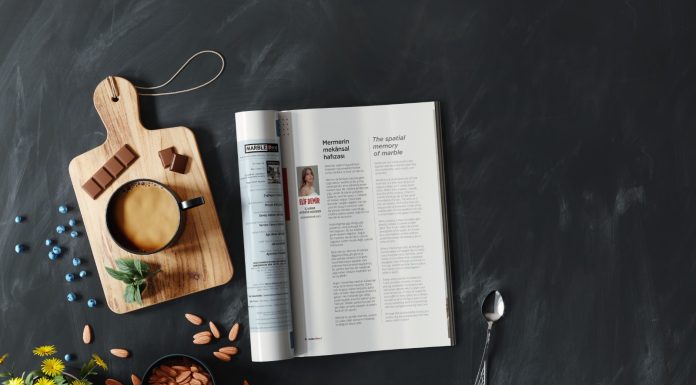
Spaces are not merely constructed; together with the materials used, they accumulate time, retain traces, and remember.
Marble is one of the foremost of these materials. It is often seen as just an elegant surface, yet it carries much more. When I enter a space, I usually look first at the surfaces; if there is marble, the language of that space immediately changes. The veins on it are not random; each is the trace of a long process of formation. In this sense, marble adds not only aesthetics but also a certain depth to the space it inhabits.

When polished, it does not reflect light directly; instead, it creates a softer effect. This, in turn, alters the overall atmosphere of the space. It is known as a cold material, yet this coldness sometimes evokes not distance, but a sense of calm.
What is interesting is this: at first glance, marble seems unchanged. But in reality, it accumulates traces over time. Small marks on its surface never completely disappear, even if they go unnoticed. In this way, marble becomes like a surface that silently records what happens within a space.
Today, using marble in architecture is also a matter of choice. It means placing something more permanent and serene against what is faster and more temporary. It may not create the same effect in every space, but it always reminds us of one thing: a space is not merely something built; it is something that lives and gains meaning over time.
Perhaps that is why marble is not just a surface, but the quietest trace that time leaves within a space.


