





The processed product momentum continues in Turkey’s natural stone exports. China takes over the sector as the biggest processed stone importer of Turkey, surpassing the USA. The processed market’s share in Turkey’s total natural stone export is increasing. What’s happening in the block market then? Why is the block market recessing? How should we evaluate these figures in China, which has been the leading actor in Turkey’s overall marble exports for many years? What are the novelties in the Chinese real-estate sector? As Marble Trend, we’ve concentrated on the block market for our latest issue.

THE MARKET HAS RECESSED BY 45-50% SINCE 2013
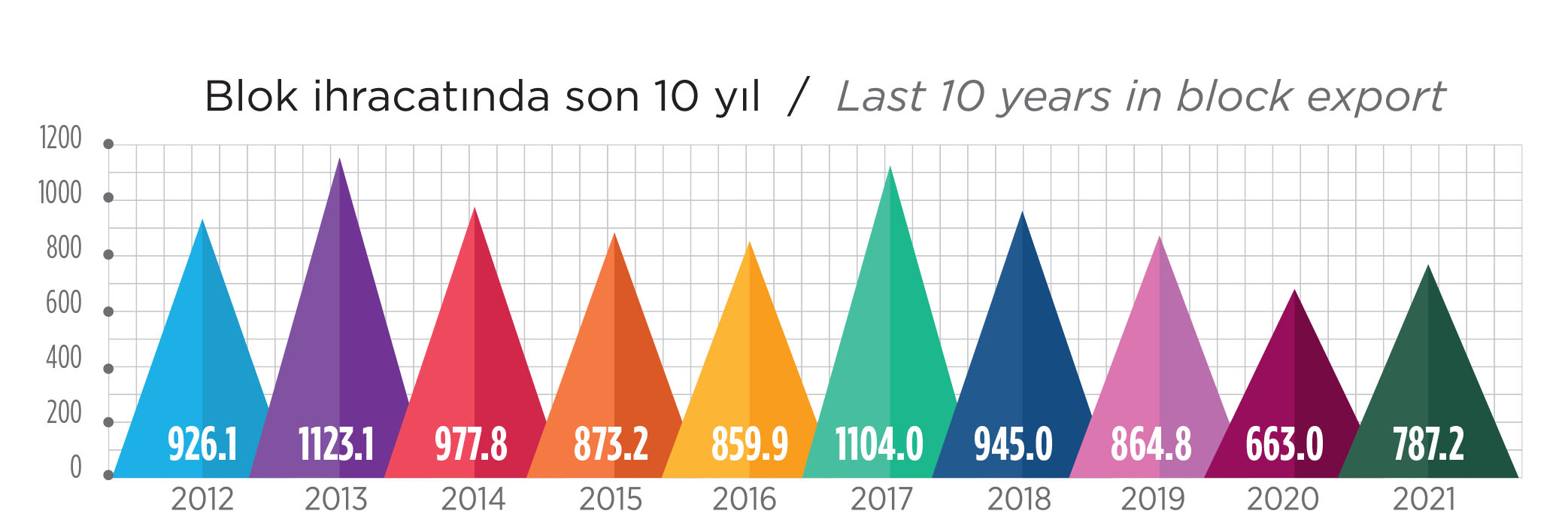
Let’s start with the numbers. After the mortgage crisis in 2008, Turkey’s natural stone export to China started to increase dramatically. This also meant a stronger block market. In 2013, the sector surpassed the $1 billion barrier and earned $1,1 billion. This was the peak in the industry. Surpassing the $1 billion barrier again in 2017, the sector had earned $1,1 billion, however, throughout the first 7 months of 2022 the situation has not been anything like it. Earning $356,8 million in the first seven months of the sector will conclude the year with an estimated value of $650 million. Compared to 2013, this indicates a recession of 45-50% and an income loss of $500 million.
$500 MILLION LOST IN CHINA
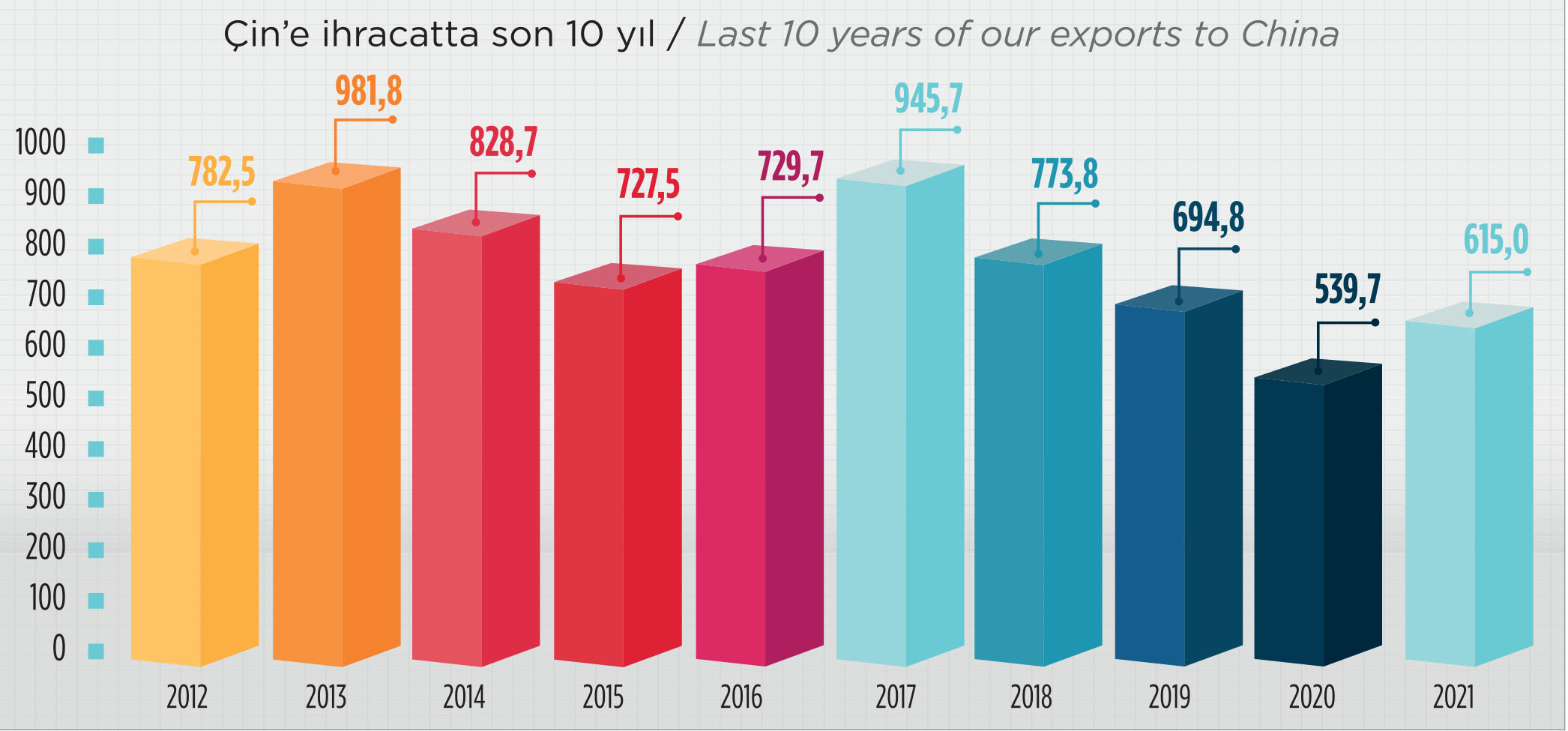
After the overall situation of the block market, let’s analyze the leading actor, China. We surpassed the $500 million barrier first in 2010, and our export peaked in two years, reaching $981 million in 2013, and $945 million in 2017. As we were getting closer to $1 billion in 2018, a recession started and it peaked due to the pandemic. Earning $242.3 million in the first 7 months of 2022, this giant market is expected to reach $400 million before the end of the year. This means that there will be a $500 loss compared to 2013. The figures indicate that this $500 million loss is due to China, just like we mentioned above.

LOANS HAVE BECOME HARDER TO MAKE SINCE 2016
What’s happening in China, then? Let’s go back in history a little. There was a huge boom in the construction market in China for 15 years. This momentum also brought about easier loans. Huge corporations benefitted from the situation and became even bigger. However, the total debt of these companies was dramatically increasing. So the Chinese authorities decided to make it harder for the firms. This situation brought about many risks in the construction sector. When Evergrande, one of the giants in the real-estate sector, announced that it was in crisis in 2021, everybody was shocked by the situation.
10 MILLION PEOPLE ARE WAITING FOR HOMES
The echoes of this situation in 2021, were felt also in 2022. The “pre-paid purchasing” model in the construction sector caused a rebellion. When they announced on July 13 that many of the projects were going to be delayed, many rebels who were dreaming to have a house rose up and stopped paying their loan debts. The disturbances started in the Henan state and spread to 100 cities. Real-estate companies that are trying to deal with the loan crisis have 1,4 million household projects to finish. 10 million people are waiting for their houses to be finished. Only Evergrande has 800 unfinished projects and 1,2 million people affected by it.

REAL-ESTATE PRICES AND INVESTMENTS GO DOWN
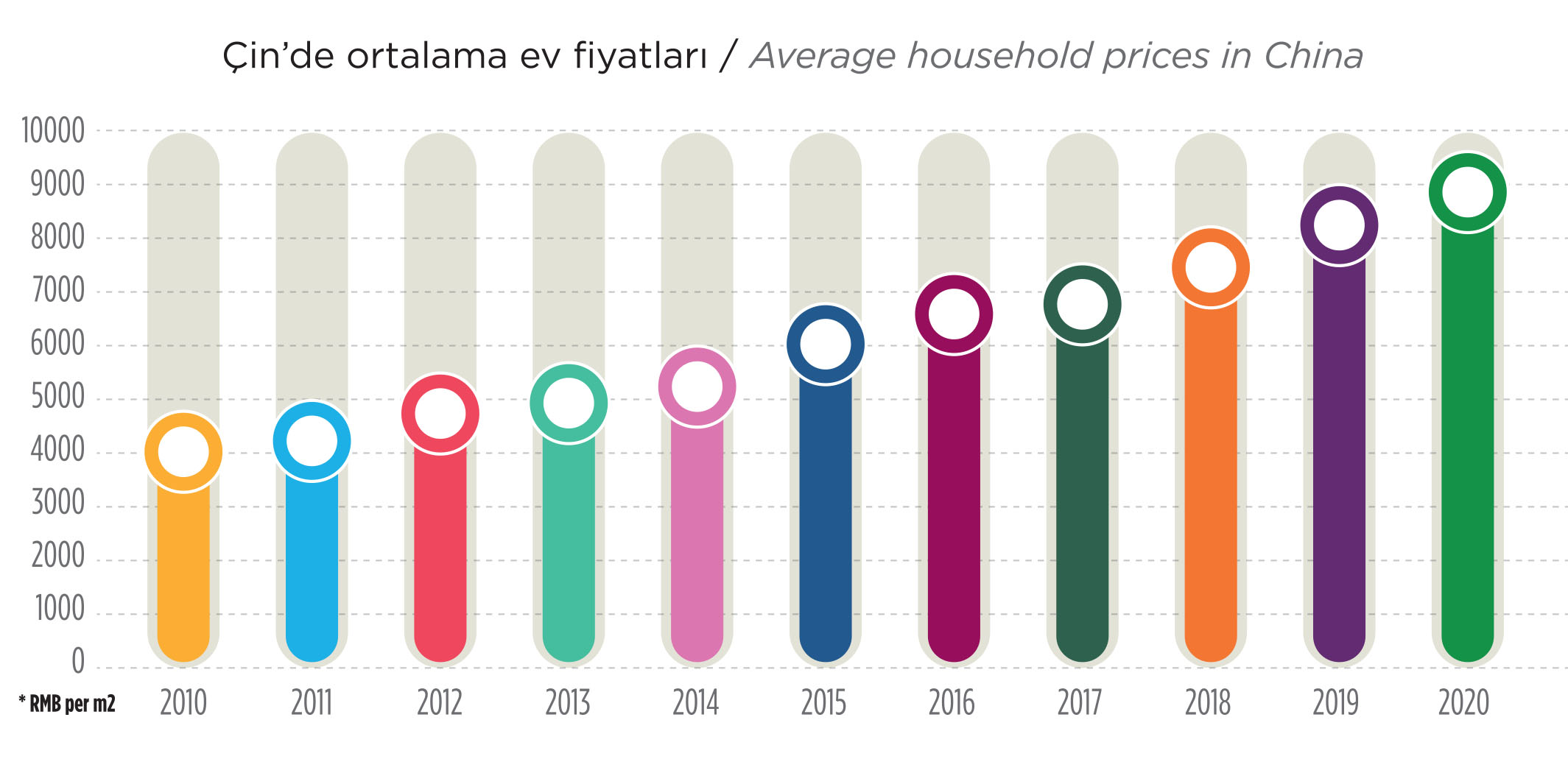
What does that crisis in China mean? According to the statistics, pre-paid projects are the most important income source for Chinese real-estate companies. It’s such that these projects correspond to 34,5% of their total capital. However, the crisis is not limited to this only. Things are changing also for household prices, which doubled between 2010 and 2020. The prices have been falling for 11 months in a row. The government has decreased the interest rates to avoid the overall crisis in the real-estate sector. However, neither the decreasing prices nor the easier loans could prevent house sales from decreasing by 31,4%. Also, the severe decrease in real-estate investments could not be stopped.

THE $44 BILLION FUND
What is the Chinese government doing then? Let’s go back in time then. The construction sector in China has managed a strong momentum for the last 15 years, which brought about credit expansion. Huge companies benefitted from the loans. However, the total debt of the companies making these loans have become an important share of the country’s GDP. That’s why the Chinese government decided to make it harder for companies to make loans in 2016. With the mortgage crisis, the Chinese government is planning to prepare a 300 billion yuan ($44 billion) fund to support the real-estate development company. And the world is worried that Evergrande might cause a crisis similar to the US giant Lehman Brothers that caused a mortgage crisis in 2018.
TOWARDS $100 MILLION IN INDIA
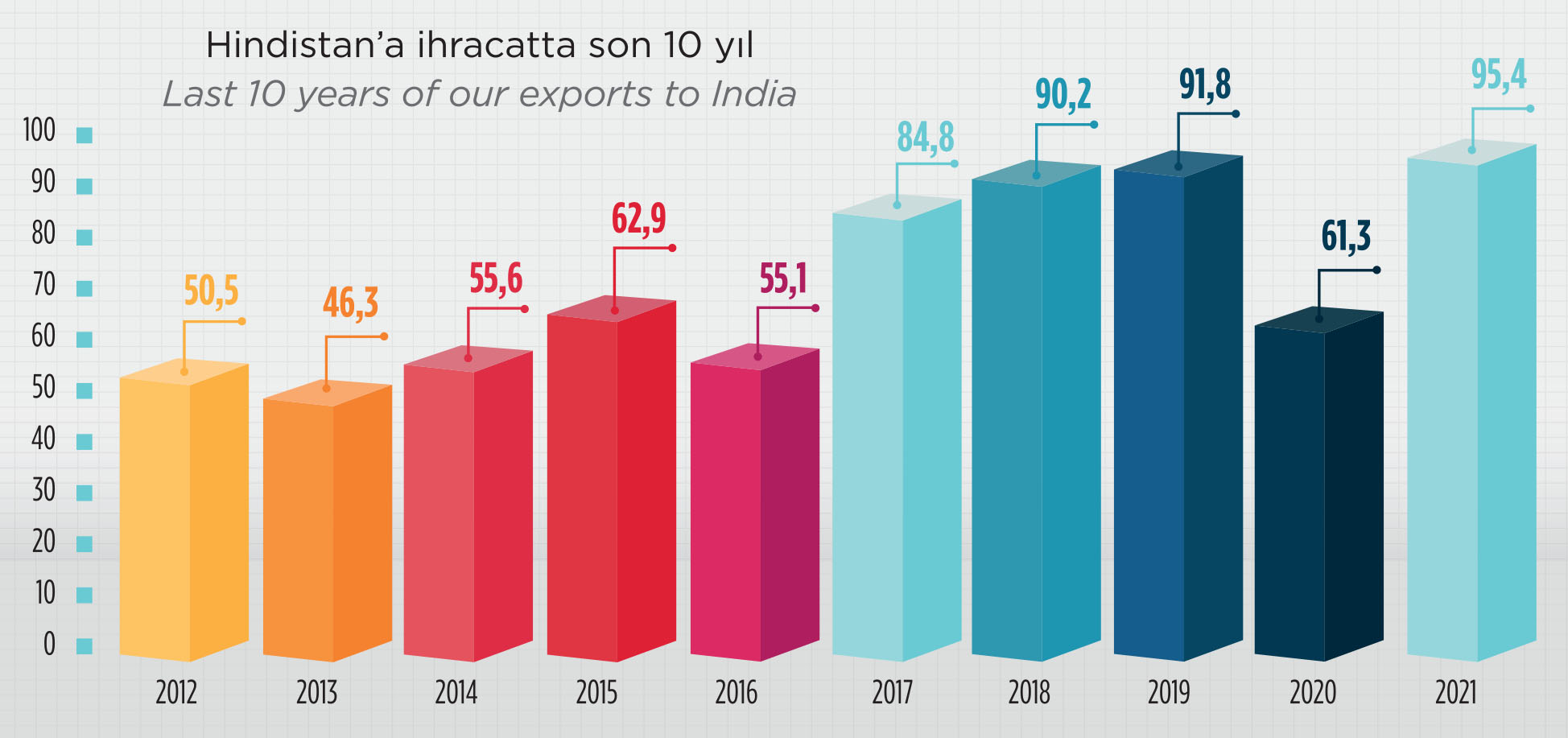
Let’s conclude the block market analysis with India. It’s impossible to compare India to China. There are not a lot of sales or huge incomes like in the Chinese market, however, it’s been a stable market if you exclude 2020 when the pandemic broke out. India, which was a $46.3 million market in 2013, has grown by 100% in 10 years. In the first 7 months of 2022, we’ve earned $67 million, and our total income is expected to exceed $100 million this year.
WHAT DOES THE SECTOR SAY?

Quality has always found clients
It’s quite clear when we take a look at the statistics in the market. China is the main cause of this problem. We’re a firm whose export is concentrated in India and Europe. The mortgage crisis in China is known. And the Indian market has been developing in a stable manner. I think at this point workmanship is more important. Blocks with quality whose production quality is high always find clients. Those who produce good products will be able to survive this.

It will never be like it used to be
First, the pandemic, then the severe recession in the Chinese market affected the block market negatively. Let’s face that 70% of Turkey’s total block export depends on China. Productive quarries work for India. That’s how we compensate for the loss in China. White and light-shaded travertines are sought-after in China. However, especially in the grey market, domestic buyers prefer cheaper stones. When we consider the problems China faces, I don’t think the market will recover from the situation.

We can grow the Italian way
We are an intermediary firm both in quarry and block export. The regression in the market is obvious. There’s nothing we can do about the Chinese mortgage crisis or the war between Ukraine and Russia. We need to take care of ourselves first. The wrong production policies in Turkey make manufacturers produce in high quantities. The natural stone heritage that we have is a national source that needs to be produced with control and sold in the long term. But we don’t do it. We can grow even more if we produced like Italians, who produce less and with quality. That way, we could have a more sustainable model.

Quarry owners should produce less
The construction sector has a saturation point. China has had a restoration period of 20 years. It has changed completely, reaching its saturation point in structure stock. The construction sector never stops completely. But it becomes more boutique. One of the greatest dangers for the marble sector is artificial materials. Since people couldn’t afford marble, they started buying artificial products. So in the long term, nothing will be the same. I would like all quarry owners to decrease production considerably. They mustn’t produce before receiving the payment. They shouldn’t increase their stocks. Because when they are full, they face price pressure, which finishes the business. They should also increase their price, reducing production. Because the cheaper the stone becomes, the harder it gets for the quarry owner. Selling cheaper with higher quantities is not a sustainable model. The quarry lasts 3-4 years.

The main problem in China is Covid
We are trying to follow China and its block market. Last month some of our clients from China were here. We had detailed conversations. When we asked them about the Evergrande crisis they told us that it was not a big problem and that the government would solve it. For them, the main issue is Covid. China has a whole different approach to the pandemic. When there is one positive case they close all the states and everything stops. Factories don’t work, markets stop, clients don’t come and projects are held. I think when they solve the covid crisis, there will be a strong mobilization in the Chinese market. I’m hopeful.

The felt regression is close to 100%
When we look at the statistics there is a harsh decrease of 30%. We work with many quarries. And we know who sells what. We feel that the loss in the sector is close to 100%: The mortgage crisis in China, the government avoiding loans, and the decreasing real-estate prices can be the results of this loss. But the major problem is still Covid. But we also observe that China prefers to use its own stones in the domestic market. That means that this situation won’t change next year, either. We’ve foreseen the regression in the Chinese market. Now it has started. We shall see if it will continue that way. But I think we will never be able to reach those figures in the Chinese market again.

The Chinese market is the source of this problem
China seems to be the main problem in the block market. It’s not a stable market at all. I think the precautions taken for the pandemic are the main reason for these problems. Because the business is about good marketing, pandemic measures prevent marketing visits and commercial fairs. We foresee a stable increase in the Indian market for 5 years. I also think that even if India seems to be a smaller market compared to China, it is more foreseeable and stable.


